Home feng shui
Front Door Feng Shui: The Through-Door Layout Fix
Fix a front-to-back through-door layout leak using classical Zang Shu energy principles and 2027 Flying Star compass directions for a calmer home.
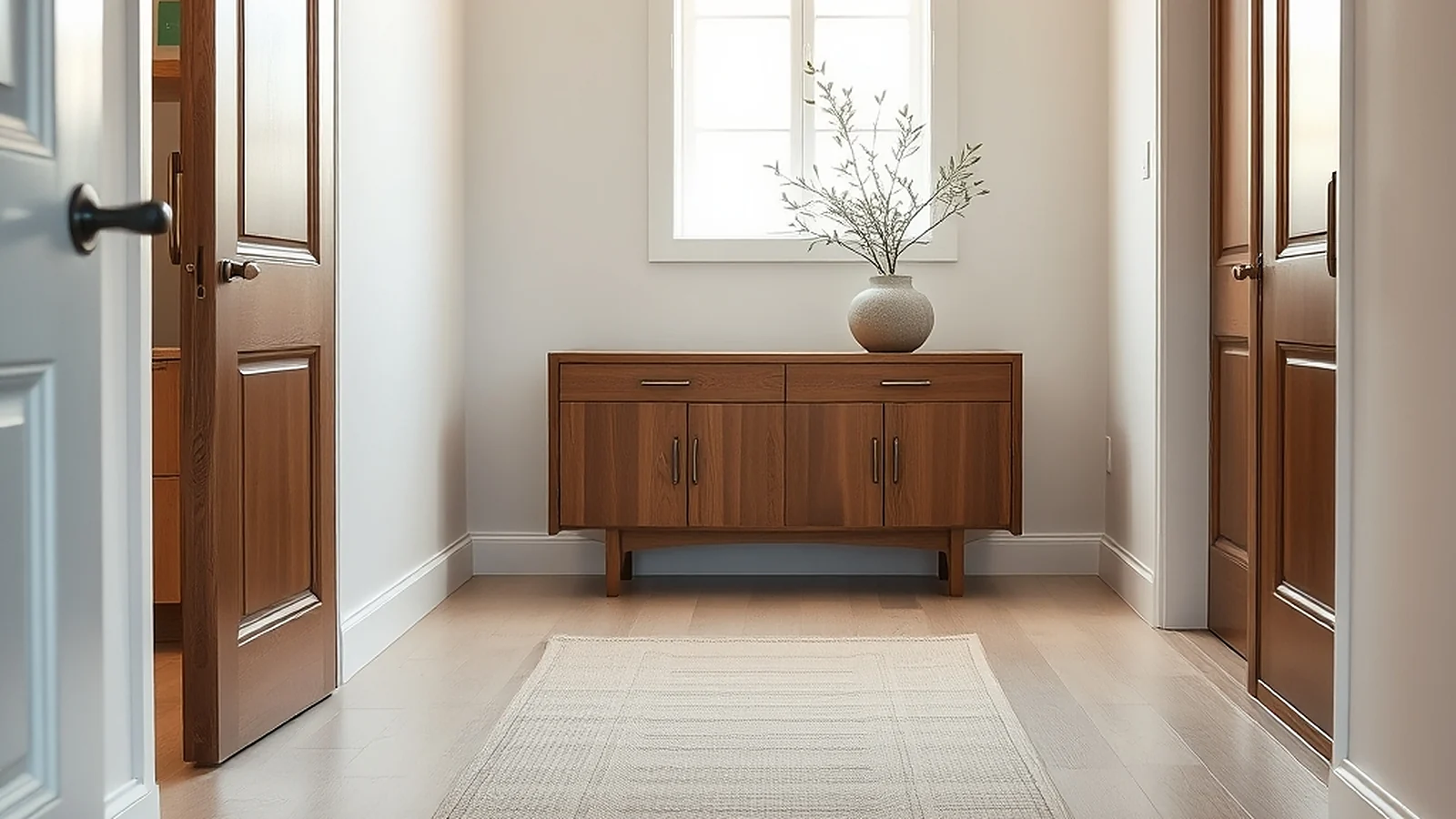
A through-door layout happens when your front door lines up straight with a back door or large window, creating a sightline that pushes incoming energy right out before it settles. You fix it by placing a physical buffer, like a solid console table, a textured runner, or an angled bench, between both openings to slow movement and guide it into your living space.
Practical feng shui pairs that layout fix with compass direction. In 2027, the Goat year, Annual Flying Stars relocate on February 4 during Li Chun, ahead of Lunar New Year on February 6. Whether your door faces Southeast for White 8 wealth luck or Southwest toward Tai Sui and the Three Killings, buffering that path keeps your home calmer.
Why Through-Door Layouts Scatter Energy in Western Homes
Stand one step inside the front door of an open-plan build, narrow townhouse, or ranch home and look straight ahead. Your line of sight often shoots uninterrupted down a central hallway or across the living area and straight out a back door, sliding glass patio, or large rear window. This front-to-back alignment is a classic through-door layout, and it undermines how a calm entryway works 4.
In the Zang Shu (Book of Burial), the classical text on siting, qi scatters when carried by straight wind and gathers where movement slows and turns. Translated into a modern floor plan, qi describes how light, air drafts, sound, and human attention move through your rooms. When front and back openings face each other directly, they create a perceptual and physical wind tunnel. Nothing invites you to pause or settle into the house; your eyes and footsteps rush straight toward the rear glass 5.
Classical layouts prevent that rush with a ming tang, a sheltered gathering pocket just inside the door where incoming movement can collect and circulate gently before branching into other rooms. The tradition assumes space for a formal foyer, though in a compact apartment or narrow terraced house the useful version is simply creating a visual pause within your first few steps so the entrance feels distinct from the exit.
Open-plan rooms also sharpen this rush through sha qi, often called cutting energy or poison arrows 6. Protruding drywall corners, kitchen island edges, exposed columns, or staircase returns pointing down the central sightline act like rigid funnels, accelerating movement and adding subtle tension the moment you enter.
Start with a quick test before moving furniture. Close the front door, stand just inside, and check whether you see a rear exit in one unbroken line and whether any hard corners aim at chest height. If a turn or solid wall naturally breaks that view, you do not have a true through-door layout.
The Through-Door Layout Fix: Slowing and Anchoring the Sightline
Open the front door, stand on the threshold, and look straight ahead. If your gaze travels uninterrupted to a back door, patio slider, or large rear window, incoming qi moves too fast to settle into the home 4. At the same time, glance toward the far diagonal corner of the main room ahead: this is the cai wei (wealth corner) relative to the entrance, and your layout needs to keep it sheltered from that rush of through-traffic.
Start at floor level by laying a textured, low-profile runner rug just beyond the door swing. A noticeable shift in texture underfoot slows your stride and defines a calm landing zone inside the threshold. Check that the door clears the pile smoothly, and leave a narrow strip of bare floor along the walls so the entry feels anchored rather than crowded.
Next, break the straight sightline with a physical pause that nudges footsteps slightly off-axis. In a narrow hallway, a curved-edge console table, about 10 to 12 inches deep, softens corners and holds everyday items without creating a sharp obstacle 5. Where width permits, angle a lightweight translucent screen a few feet inside the door, keeping at least a 36-inch clear walkway so passage stays effortless. The classical tradition calls for a solid spirit wall, yet in a compact Western apartment, a tall leafy plant or an open-slat wooden divider interrupts the view just as well without blocking daylight.
Finally, place a console lamp or low pendant near the front to build a warm pool of light, creating a natural focal point that invites energy to pause before drifting deeper inside. Anchor the diagonal cai wei with a steady, grounded piece, such as a low bookcase or reading chair, so circulation curves gently through the room instead of bolting out the back 6.
2027 Compass Overlay: What Your Front Door Direction Means This Year
The annual Fei Xing (Flying Star) positions relocate on February 4, 2027, during Li Chun, two days before Lunar New Year begins the Goat year on February 6 1. If your home has a straight through-door layout, take a compass reading at your threshold before February 4 so you know whether the incoming year brings a calm or unsettled star to your entry.
Traditional practice reads the door’s compass sector against the annual overlay rather than treating every entry alike. In 2027, Purple 9 (Right Supporter Star, Fire element) occupies the Central Palace for celebrations, while the outer compass directions divide into auspicious and challenging zones for front doors 3:
| Direction | 2027 Fei Xing & Element | Classical Designation | Practical Doorway Approach |
|---|---|---|---|
| Southeast | White 8, Left Assistant (Earth) | Main wealth sector | Keep the foyer bright and uncluttered |
| Northwest | White 1, Greedy Wolf (Water) | Romance and career sector | Maintain steady, unblocked entry flow |
| South | Green 4, Literary (Wood) | Academic and wisdom sector | Keep shoes and coats neatly contained |
| Southwest (195°–225°) | White 6, Martial (Metal) + Tai Sui | Side income and windfall; Tai Sui | Avoid banging doors or loud entry work |
| North | Yellow 5, Upright Honor (Earth) | Misfortune sector | Keep activity quiet and minimal |
| West | Black 2, Great Gate (Earth) | Illness misfortune sector | Prioritize clean clearance and fresh air |
| East | Red 7, Army Breaker (Metal) | Theft and loss risks | Check door locks, latches, and lighting |
The tradition treats Yellow 5 in the North, Black 2 in the West, and Red 7 in the East as sectors to settle rather than stir up, and Southwest doors between 195° and 225° call for extra stillness around Tai Sui 1. In a small apartment where you cannot move the front door, the useful version is straightforward: keep challenging thresholds quiet and tightly maintained, and slow down any straight through-door path before it reaches the far wall.
Using the Five Elements to Balance Your 2027 Entryway Fix
Once a narrow console, slatted screen, or low bench is slowing the view to your back exit, match its finishes to the wu xing (five elements) cycle. Put these adjustments in place before Li Chun on February 4, 2027, when the annual flying stars shift two days ahead of Lunar New Year 1.
If your front door sits in the North or West, your buffer stands in an Earth-heavy sector for 2027: North carries the Yellow 5 Earth star, while West holds the Black 2 Earth star 3. In classical five-element theory, Metal drains excess Earth quietly, whereas Fire feeds it. Skip terracotta pots, red runners, or warm-lit lamps on a North or West foyer table. Instead, ground the buffer with understated Metal finishes: a brushed-nickel frame, a pewter tray, or a pale grey wool rug. Leave at least 36 inches of clear walkway around the buffer so the entry stays open. The tradition often prescribes brass chimes or coin strings, yet in a small apartment, a matte cast-iron umbrella stand or metal sconce carries the same calming weight.
An East entryway faces a different 2027 shift, hosting the Red 7 Metal star linked to theft and loss risks. To soften sharp Metal without provoking it, bring in Water through color and form. Swap brass hardware or metal coat hooks on your buffer for a slate-blue runner, smoked glassware, or cut stems in clear glass on a 12-inch-deep console. Avoid heavy earthenware and bright reds in this setup.
Finally, check the doorway’s compass direction against your household’s ben ming gua (Kua number) 5. Because personal compatibility can differ between partners under one roof, avoid repainting entry walls for a single year’s chart. Keep fixed surfaces neutral and confine your 2027 adjustments to movable rugs, trays, and lamps.
Modifying a Southwest Door in 2027 Without Disturbing Tai Sui
Check your compass and calendar before changing a doorway or rear exit to block a through-door sightline. At Li Chun on February 4, 2027, two days before Lunar New Year on February 6, Tai Sui moves into the Southwest between 195° and 225° 1. If your doorway wraps clockwise past 225° into the West (225° to 315°), it enters the Three Killings sector. That sector is separate from the Tai Sui sector in the Southwest, and the tradition asks for both to be left still. Either way, a 195°–225° Southwest doorway must stay structurally quiet all year, even though the Metal-element White 6 star visits the Southwest in 2027 3.
The practical line to draw is between quiet, furniture-based fixes and loud remodeling. If your front or rear door sits in that 195°–225° zone, avoid drilling, hammering, demolition, or cutting into framing and drywall after February 4. Built-in mudroom benches, recessed lighting, and new door jambs belong either before Li Chun or in 2028.
To soften a through-door sightline without touching the walls, use freestanding pieces instead. In a wide foyer, place a 12-to-16-inch-deep console table 3 to 5 feet inside the entrance to curve foot traffic gently aside. Where a table would pinch a small apartment walkway, a weighted screen or a heavy, flat-woven runner over a rubber pad, rather than nailed tack strips, achieves the same pause without crowding the swing of the door. A heavy ceramic planter beside the threshold also anchors the space without wall anchors. If an urgent safety issue arises, such as a leaking sill or failed deadbolt, repair only what is necessary and postpone optional updates until next year.
FAQ
When do the 2027 annual Flying Stars change compared to Lunar New Year?
In 2027, Lunar New Year falls on February 6. The annual Flying Stars relocate earlier on February 4, 2027, during Li Chun rather than on Lunar New Year.
Where is Tai Sui located in 2027, and what does that mean for entryway renovations?
In 2027, Tai Sui sits in the Southwest House of the Goat from 195° to 225°, the Three Killings sit separately in the West, and White 6 shares the same corner.
Which front-door sectors are most auspicious in 2027 Feng Shui?
In 2027, White 8 brings main wealth luck to the Southeast, White 1 occupies the Northwest romance and career sector, and Green 4 occupies the South academic and wisdom sector. Purple 9 occupies the Central Palace for celebrations, and White 6 occupies the Southwest side income and windfall sector.
Sources
- 2027 Flying Star Feng Shui: How to Feng Shui Your House for the Year of the Fire Goat – Fe
- [Feng Shui Renovation Protection Talisman
- 2027 Flying Star Feng Shui Guide: Charts, Layout & Adjustments - Yixiang Qiankun
- Feng Shui Entryway: 7 Rules for Your Front Door and Foyer
- Feng Shui Front Door — Colors, Direction & Layout Guide | MysticCalc
- Feng Shui House Entrance: Front Door Rules, Symbols & Placement Tips
- Feng Shui
Conclusion
For 2027, Lunar New Year begins February 6, while annual Flying Stars relocate February 4 during Li Chun. Favorable stars include Purple 9 in the Central Palace for celebrations, White 8 in the Southeast for wealth luck, White 1 in the Northwest for romance and career, and Green 4 in the South for academic wisdom. White 6 occupies the Southwest side income sector alongside Tai Sui. The Three Killings, by contrast, sit in the West. Yellow 5, Black 2, and Red 7 bring misfortune, illness, and theft risks to the North, West, and East.
Related reading: Feng Shui 2027, 2027 Flying Star Chart