Home feng shui
Commanding Position Feng Shui: The One Rule Designers Agree With
Commanding position feng shui explained: why a solid wall behind the seat and the door in view works, and how to apply it to a bed, desk or sofa in 2027.
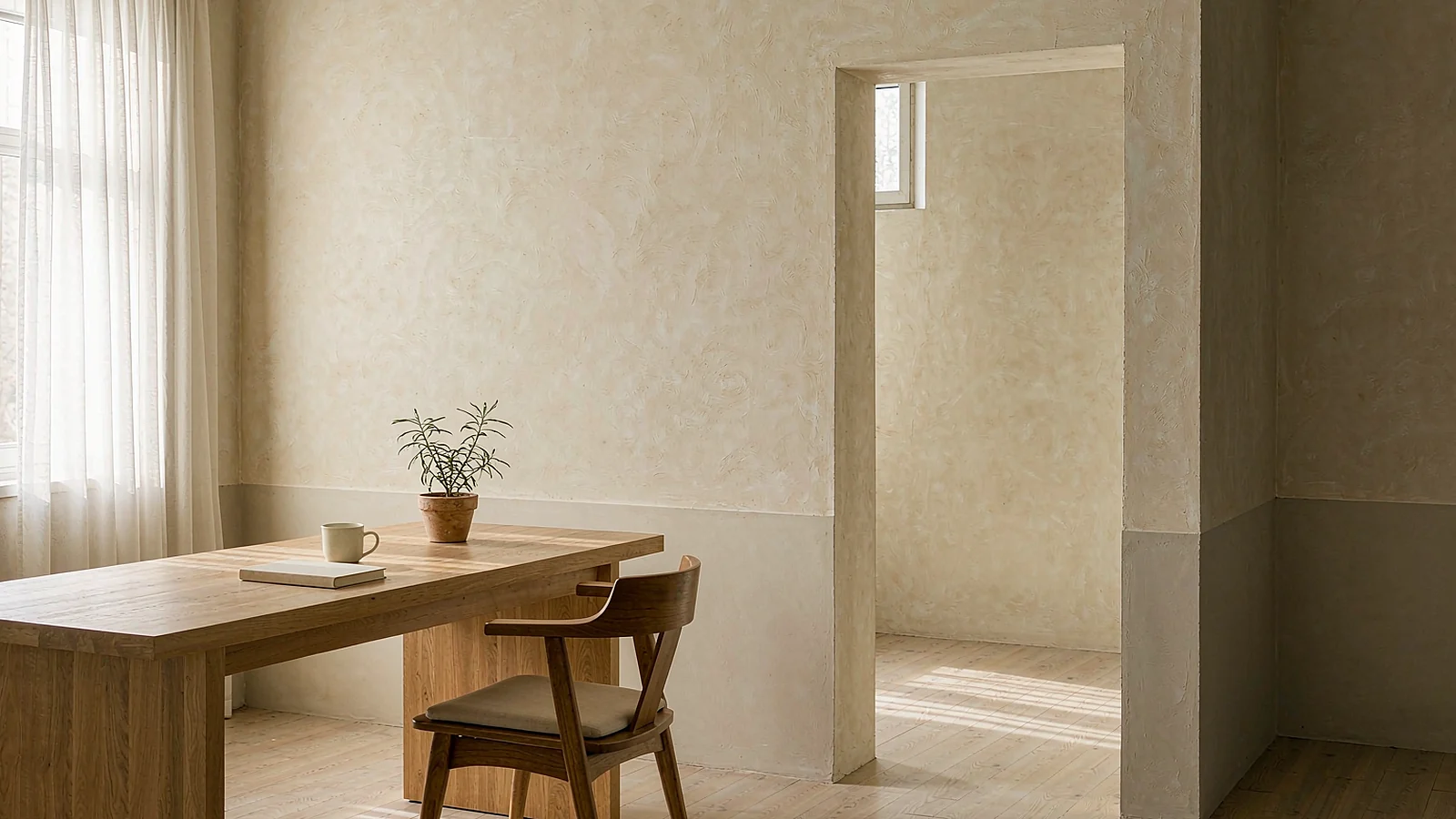
The commanding position in feng shui means placing the main piece of furniture so that you can see the room’s entrance while sitting clear of the door’s straight line. Interior designers keep recommending it because the three things it asks for — a solid wall at your back, some distance from the threshold, and a diagonal view of the door — remove blind spots and the low-grade alertness that comes with them. None of it depends on an annual chart or a symbolic object. It is the same logic that puts high ground behind a city and open ground in front of it.
From Mountain Backs to Bedroom Walls: What Commanding Position Translates From
Before this layout became a bedroom checklist, it was landscape architecture. Traditional Chinese architectural theory judges a settlement by three features: shielding mountains at the back, a navigable water outlook in front, and fertile plains stretching ahead. The civic version of that pattern is visible in Beijing, set at the northwest corner of the North China Plain on a north-south axis centred on the Forbidden City, and in Tekes Town in Xinjiang, which sits beneath steep northern mountains with an eastward-flowing river to the south 2.
In classical texts, the open sheltered expanse in front of a seat of power is the ming tang, the bright hall — ground where approaching movement stays visible without leaving your back exposed. Inside a Western home, one room replaces the valley. Your bed, sofa, or desk becomes the main structure, and the doorway acts as the mountain pass where people and activity enter.
Scaled indoors, the rule asks for solid wall support behind you, a working distance from the doorway, and a sightline to the room’s entrance that runs on the diagonal rather than head-on 4. In a bedroom that means anchoring the headboard against a solid wall — your indoor mountain — and setting the bed at an angle to the door rather than in line with it 4. The floor left open between the foot of the bed and the entrance becomes the indoor ming tang: enough room to see who arrives, without sitting in the doorway’s path.
The practical method is to start at the door, find the solid wall furthest from the door swing, and check from there whether the entrance is visible without lining the furniture straight down the opening. The tradition asks for an unbroken wall behind every bed. In a small apartment where the only diagonal wall holds a window, the working version is a solid headboard paired with heavy curtains closed at night.
Quick reference
| Question | Short answer |
|---|---|
| Where does the rule come from? | The ming tang — open, sheltered ground kept in front of a seat of power, with high ground behind it. |
| What are the three conditions? | Solid wall behind the seat, distance from the doorway, and a diagonal view of the entrance. |
| Does the 2027 chart change it? | No. Annual stars and Tai Sui move on 4 February 2027; the furniture rule does not move with them. |
| Where is Tai Sui in 2027? | Southwest, 195° to 225°, the House of the Goat, sharing the sector with Flying Star #6. |
The Three Spatial Rules Where Feng Shui and Interior Design Overlap
Classical Chinese architectural theory looks for shielding mountains behind a site and an open outlook in front 2. Inside a bedroom or home office, the commanding position turns that siting logic into three physical criteria that interior designers also work with 6. Before moving anything, stand in the threshold and check three things: the solid walls, the clearance at the entry, and any straight lines crossing the room.
First is solid wall backing 4. Put the headboard or the desk chair against an unbroken wall instead of floating it mid-room or backing it onto glass. In physical terms, solid backing stops drafts, glare, and unmonitored movement behind your shoulders. The tradition favours a completely windowless wall. In a small apartment where every wall carries a window, the working version is centring the bed on the widest solid pier and drawing heavy curtains over the overlapping glass.
Second is buffer distance from the doorway. A bed or desk set flush to the threshold traps you inside the door’s swing arc and the main line of foot traffic. Push the primary piece deeper into the room so the door opens fully without clipping a nightstand or chair, and leave quiet space between the hall and where you settle. In a tight studio where seating has to sit near the entrance, a narrow console or a low bookcase between door and sofa buys that buffer.
Third is the diagonal sightline. Angle the bed or desk so the entrance stays in view without sitting square to the doorframe. Stepping off the direct axis keeps you out of the straight path of incoming energy (qi) and out of range of sharp poison arrows (sha qi) — a corridor aimed at the foot of the bed, or a protruding wall corner pointing at your chair. Test it from the pillow or the seat: a clear diagonal view of the door, and no sharp edge aimed your way.
Applying the Commanding Position to Your Bed, Desk, and Sofa
For the bedroom, look to the solid wall furthest from the door. The three conditions still apply: wall support, working distance from the threshold, and a diagonal view of whoever comes in 4. In a compact Western bedroom where windows or closet doors hold that corner, take the solid wall furthest from the entrance, anchor a sturdy headboard flush to it, and keep the foot of the bed out of the doorway’s direct path. If the room is too narrow for any diagonal, the five bedroom layouts here cover the compromises that still work.
In a home office, apply the rule to the chair rather than the desk surface alone. Sit with a solid wall behind your back and angle or shift the desk so the entrance sits diagonally in front of you. Many modern workspaces push people to face a blank wall with the door behind them, because that is where the outlets are. Even in an apartment nook, a shallow corner layout or pulling the desk slightly into the room restores the view of the doorway.
Living rooms follow the same principle for the main sofa 5. Open-plan layouts often float seating toward a fireplace or a television with no wall behind it. Backing the sofa with a substantial console table creates a defined boundary while keeping the room’s primary entry inside your field of vision.
Modern interior guides endorse this placement as a practical whole-home rule, but short summaries leave gaps around mirror corrections 6. Hanging a mirror whenever your back faces a door rarely explains how reflections create glare in a sleeping room, or why a mirror cannot substitute for physical backing. When a small room forces a compromise, the better route is a dedicated bedroom layout plan and your Kua number rather than a mirror.
How 2027’s Flying Stars and Tai Sui Interact With Your Room Layout
Think of the commanding position as your room’s permanent architecture and the annual shifts as weather. One anchors a bed or desk to a solid wall, at a working distance from the threshold, angled so the door stays visible 4. The other runs on a different clock and turns over on 4 February 2027, the date of Li Chun. Sound furniture placement is never sacrificed because the calendar turns.
Before 4 February 2027, take a compass reading and check whether part of the room falls inside the Southwest House of the Goat, 195° to 225°, where Tai Sui spends the year in a partial overlap with Flying Star #6 1. Then test what moving the furniture would cost. If shifting a bed out of that Southwest band would pull the headboard off a solid wall, or line the bed up with the doorway, leave the bed where it is. Poor commanding position creates friction every night; Tai Sui asks for quiet in one sector of the plan.
The tradition asks that the Southwest zone be left undisturbed by noisy work or renovation after Li Chun. In a small apartment where the only commanding-position desk sits between 195° and 225°, the workable version is keeping that corner tidy and free of heavy disruption, and finishing loud repairs or furniture moving before 4 February so the space is settled when the year turns.
One contemporary guide suggests a plugged-in salt lamp between 202.5° and 225° to calm the 2027 Tai Sui sector 1. Treat that lamp-and-degree setup as one author’s house practice, not classical consensus. Keep the bed or desk in its solid diagonal spot first, and leave the Southwest quiet from 4 February onward.
Renovation Timing, Annual Afflictions, and What to Skip in 2027
Before booking contractors for structural work in 2027, check two things: the compass bearings on your floor plan, and the calendar. The 2027 Fire Goat year, Ding Wei, starts on 4 February 2027 at Li Chun 1. Traditional renovation warnings track a handful of markers — Tai Sui, Sui Po, the Five Yellow, the Three Killings, and sha qi among them.
Three of those occupy fixed, separate sectors through the year. Tai Sui sits in the southwest from 195 to 225 degrees, Sui Po sits opposite in the northeast from 15 to 45 degrees, and the Three Killings sits in the west from 225 to 315 degrees. They are neighbours on a compass, not the same zone, and the west stays west even where it meets the southwest band at 225 degrees.
Homeowners worried about those degrees run into commercial fixes quickly. Paid talismans and consecrated objects are worth skipping; what the tradition actually asks of an afflicted sector is stillness — no demolition, no drilling, no structural wall changes there until the next Li Chun arrives.
If a planned remodel falls inside the southwest, the northeast, or the west, postponing the structural work is the safest step. Non-invasive rearranging is the practical exception, and it leans on the commanding position — the one rule designers across both camps agree on — rather than on cures: set the bed or the main seating diagonally across from the doorway, backed by a solid wall, with enough distance to see the entrance without being in its line 4. The room calms immediately, with no construction risk and nothing to buy.
FAQ
What is the commanding position in feng shui?
It is the placement that lets you watch the room’s entrance from a diagonal seat, with a solid wall behind you and space between you and the door. It applies to a bed, a desk chair, or the main sofa, and it does not change from year to year.
Which cities in China show the same siting logic?
Traditional Chinese architectural theory bases ideal city siting on shielding mountains, a navigable water outlook, and fertile plains. Beijing sits at the North China Plain’s northwest corner on a north-south axis centred on the Forbidden City; Tekes Town in Xinjiang is laid out as a concentric octagon with steep northern mountains above it and a river to the south.
When do the 2027 annual stars move, and where is Tai Sui?
The annual Flying Stars shift on 4 February 2027, the day Li Chun begins. Tai Sui then resides in the Southwest House of the Goat, 195° to 225°, a sector that partially overlaps Flying Star #6. The Three Killings sits separately in the west, 225° to 315°, so treat the two zones independently.
Sources
- 2027 Flying Star Feng Shui: How to Feng Shui Your House for the Year of the Fire Goat
- China Cities to Visit with Good Fengshui
- What is the Commanding Position in Feng Shui and How to Optimize Your Space for Harmony
- The Command Position: A Whole-Home Guide | Lucky Properties
- Why the Command Position is the one Feng Shui rule you should follow | Livingetc
Conclusion
Putting furniture in the commanding position means the entrance stays in view without putting you in its path: solid wall behind, working distance from the threshold, bed or chair on the diagonal. That layout carries the logic of traditional Chinese siting — shielding mountains, a water outlook, fertile plains — into a single room, the same logic visible in Beijing and in Tekes Town. The 2027 overlay is separate and simpler: on 4 February the annual stars move, Tai Sui takes the Southwest from 195° to 225°, Sui Po takes the northeast, and the Three Killings takes the west. Keep the furniture rule, leave those three sectors quiet, and the year’s chart never has to fight your floor plan.
Related reading: Feng Shui 2027, 2027 Flying Star Chart